WHY LUOYANG
The Old Capital Most Visitors Skip
Luoyang was a capital for thirteen dynasties and one of the four great ancient capitals of China. Today it is a mid-sized city that happens to hold one of the largest collections of Buddhist art in China — and far fewer visitors than Beijing or Xi’an.
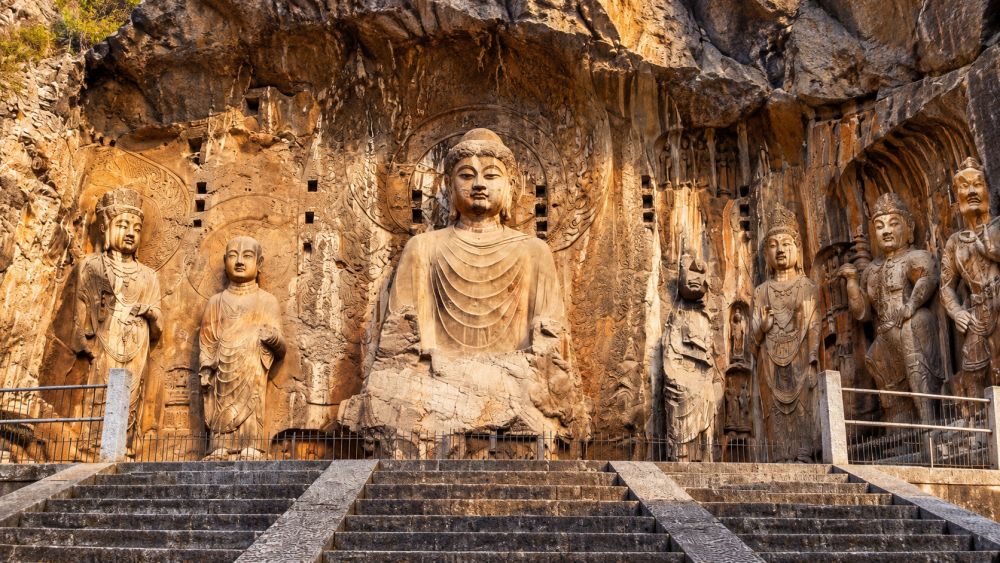
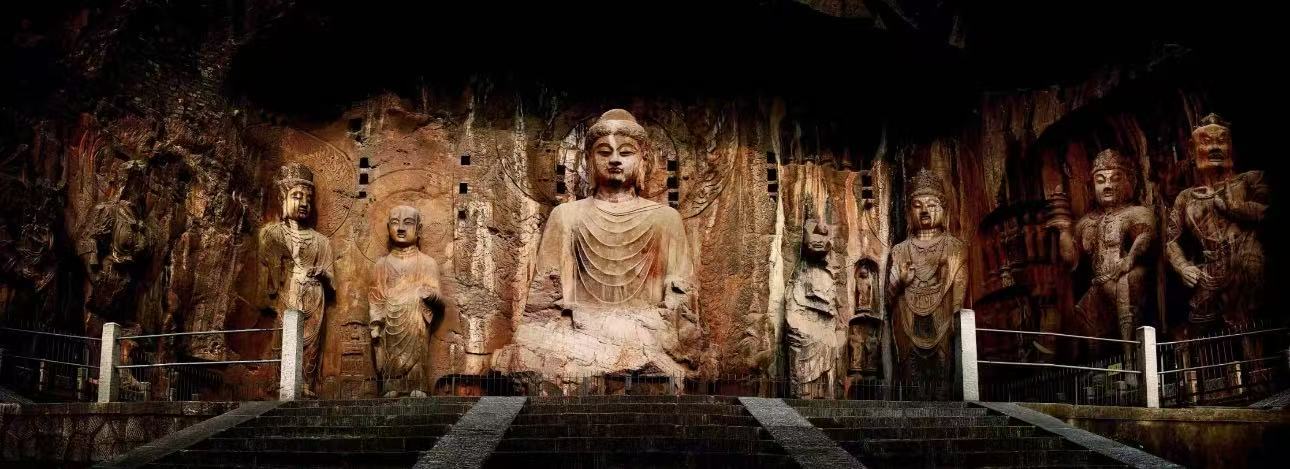
The Longmen Grottoes stretch for a kilometer along the Yi River, where more than 2,300 caves and niches were carved into the limestone cliffs between the 5th and 8th centuries. Together they contain over 100,000 Buddhist figures, from tiny reliefs a few centimeters tall to the colossal Vairocana Buddha, nearly 17 meters high, completed in the 670s.
This is also where Buddhism took root in China. The White Horse Temple, founded in 68 AD, is regarded as the first Buddhist temple in the country, and it is still an active working monastery. An hour south-east of the city, the Shaolin Temple on Songshan Mountain is the legendary birthplace of Chan Buddhism and of kung fu, with a forest of more than 240 stone pagodas marking the graves of generations of abbots.
Luoyang is an easy stop to add between Xi’an and Beijing or Zhengzhou. Two days is enough to see the grottoes properly and make the trip to Shaolin, and you will experience a side of China that does not revolve around tourism.
WHAT TO SEE
Highlights of Luoyang
One long riverside walk, one mountain temple, and a city that rewards a couple of unhurried evenings.
Longmen Grottoes
A UNESCO World Heritage site and the reason most travelers come. The route follows the Yi River for roughly four to five kilometers, past the Fengxian Temple with its enormous Vairocana Buddha, the dense carvings of Guyang Cave, and the medical prescription cave where Tang dynasty remedies were inscribed on stone. Come early for cooler air and softer light; on some evenings the caves are lit after dark.
Shaolin Temple & Pagoda Forest
About 90 minutes from Luoyang on Songshan Mountain. The temple was founded in 495 AD and is recognized as the birthplace of Chan Buddhism and of Shaolin kung fu. Behind it, the Pagoda Forest holds more than 240 brick and stone pagodas, each raised for a former abbot. Daily martial arts demonstrations are held at the nearby performance halls.
White Horse Temple
Founded in 68 AD and considered the first Buddhist temple in China, built after monks returned from India with scriptures carried on white horses. The complex is calm, shaded and much quieter than the grottoes, with halls from several dynasties and a small museum around the original well.
Luoyang Museum
Strong on the dynasties that ruled from here, and particularly good on Tang tri-color glazed pottery and Han and Tang burial figures. A useful two-hour visit that makes the history of the city click into place, and a sensible rainy-day option.
Luoyang Old Town
The reconstructed Lijing Gate and the lanes behind it fill up in the evening with snacks, noodle shops and lanterns. It is commercial, but the street food is genuinely local — look for the famous water banquet soup dishes that Luoyang is known for.
The Peony Gardens
Luoyang has cultivated tree peonies for more than a thousand years and holds a festival every April, when the city’s gardens are at their peak. If you travel in spring, this is the strongest reason to time your visit to Luoyang rather than another city.
SAMPLE ITINERARY
Two Days in Luoyang
Two days is the natural length for Luoyang. Travelers with three days often add a night in Dengfeng or continue to Kaifeng and Zhengzhou.
Longmen Grottoes and the old town
Keep the morning and early afternoon for the grottoes, then slow down in the evening.
- Longmen Grottoes: Fengxian Temple, Guyang Cave and the riverside walk
- Luoyang Museum in the late afternoon if time allows
- Evening in the old town around Lijing Gate, with local soup dishes for dinner
Shaolin Temple and Songshan
A full half-day on the mountain, then back to the city or onward by rail.
- Shaolin Temple, the Pagoda Forest and a kung fu demonstration
- White Horse Temple on the way back into the city
- High-speed rail onward: Xi’an 1.5 hours, Zhengzhou 40 minutes, Beijing 3.5 hours
PRACTICAL NOTES
Before You Go
Longmen takes real walking
The full route is four to five kilometers along the river, with stairs and very little shade. Start in the morning, carry water, and wear shoes with grip. Battery shuttle buses connect the main sections if the walk is too long for anyone in your group.
Shaolin is a separate trip
The temple is in Dengfeng, about 90 minutes by road from Luoyang. Treat it as a half-day excursion with a private car or a guided group rather than something you can fit around a city morning.
Time it with the peonies
Mid to late April brings the peony festival and the city’s gardens in full bloom, but also the largest crowds and higher hotel rates. Book well ahead if you plan to travel in festival week.
English is less common here
Luoyang receives far fewer international visitors than Beijing or Xi’an, and English signage is limited outside the grottoes. An English-speaking guide is worth arranging for the Longmen visit in particular.
Combine Luoyang with
Luoyang sits on the Zhengzhou–Xi’an high-speed line, which makes it a straightforward two-night stop inside a longer route.
A LOOK AROUND
Impressions of Luoyang
Plan Your Luoyang Journey
Luoyang works well as part of a longer route rather than as a stand-alone stop. Tell us where you are starting and finishing, and we will show you where it fits.
GET MY CUSTOM CHINA PLANREADY WHEN YOU ARE
Plan Your Luoyang Journey
Tell us your dates, pace and interests. We will come back to you with what is realistic and, if you want to take it further, introduce you to an independent travel service provider.