WHY XI’AN
Where the Silk Road Began
Xi’an is the city that makes Chinese history feel physical rather than theoretical. You can cycle a complete ring around a Ming dynasty wall in the morning and stand in front of an army of 2,200-year-old soldiers in the afternoon.
As Chang’an, the city was the capital of thirteen dynasties and the eastern terminus of the Silk Road. Around the year 750 it was probably the largest city in the world, with more than a million residents, foreign merchants, and a cosmopolitan mix of religions and trades that arrived along the caravan routes from Central Asia.
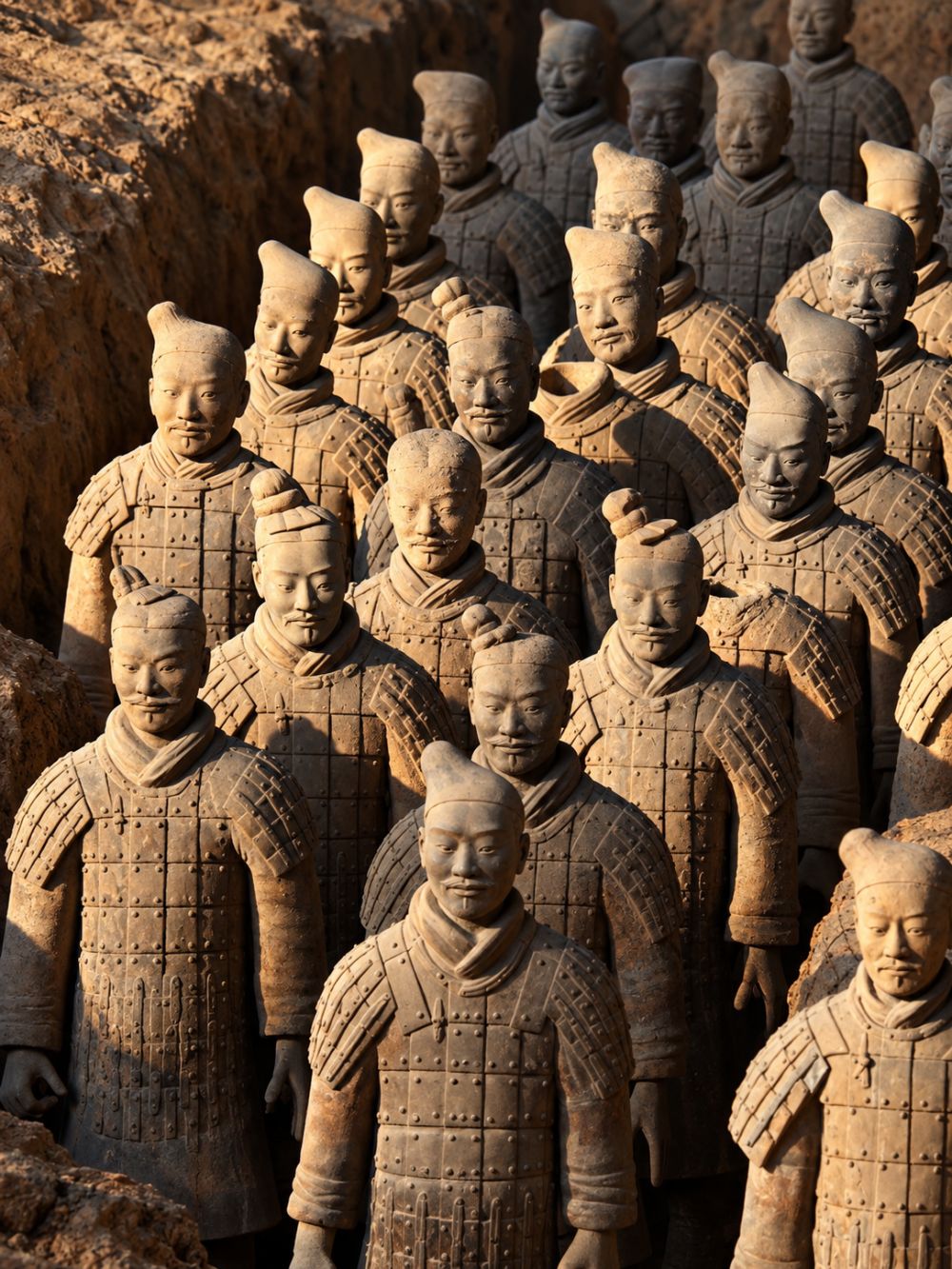
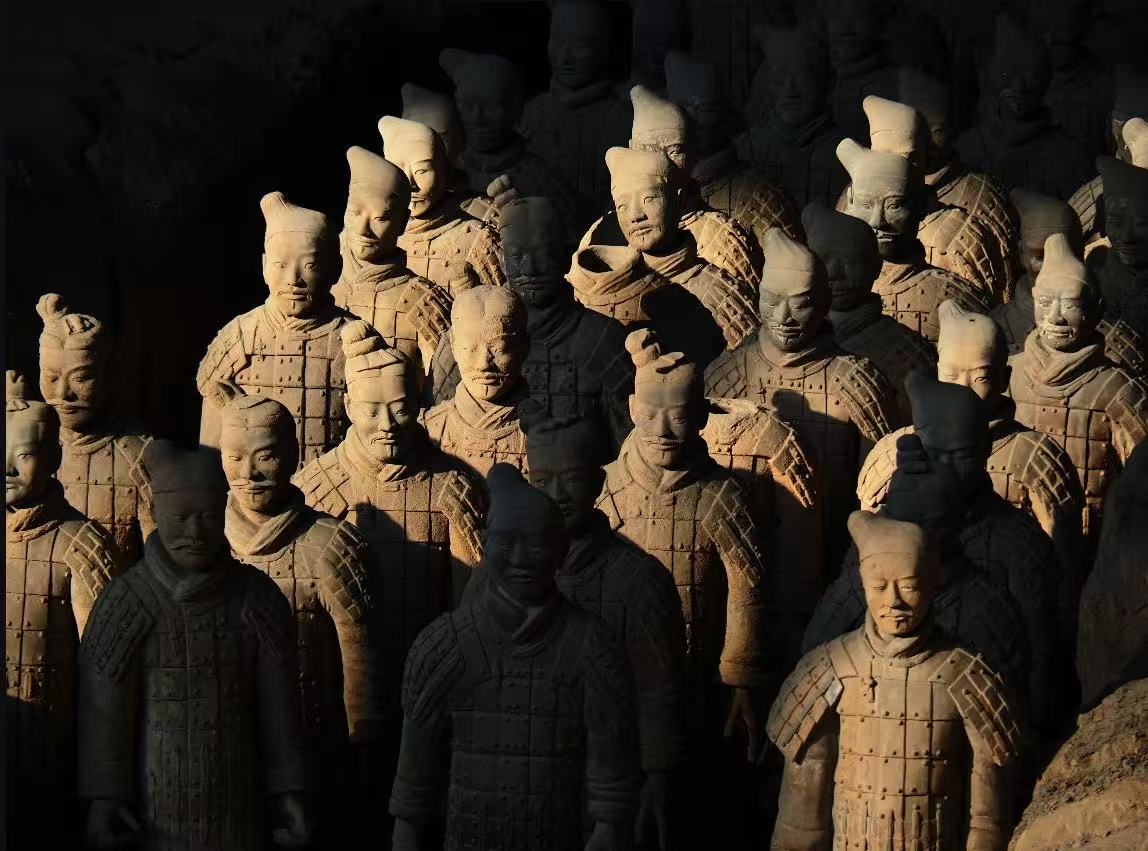
The Terracotta Army is the reason most travelers come, and it deserves the reputation. The figures were discovered in 1974 by farmers digging a well, and more than 8,000 soldiers, archers, chariots and horses have been recorded since — no two faces identical. The emperor’s own burial mound nearby remains unexcavated.
But Xi’an is more than one site. The Ming city wall, built in the 1370s, still forms a complete 13.7-kilometer rectangle around the old town and is wide enough to cycle along the top. Inside, the Muslim Quarter has been home to a Hui community since the Tang dynasty, and the Great Mosque a few lanes away is built entirely in Chinese architectural style. Then there is the food: hand-pulled biangbiang noodles, lamb soup with torn bread, and pork-stuffed flatbread that locals queue for at breakfast.
WHAT TO SEE
Highlights of Xi’an
Plan on one long day outside the city and two full days inside the walls.
Terracotta Army
Three excavation pits 40 kilometers east of the city, protected in hangar-like halls. Pit 1 is the size of an aircraft hangar and holds the main battle formation; Pit 2 shows the cavalry and archers; Pit 3 is the command post. Visiting the pits in reverse order often means fewer crowds, and the bronze chariots in the separate exhibition hall are easy to miss. Tickets are sold online with a passport and daily numbers are limited.
The City Wall
A complete Ming fortification, 13.7 kilometers around the old city and around 12 meters wide at the top. Bicycles can be rented on the wall itself; a full circuit takes about 90 minutes at an easy pace. Go late in the afternoon so you finish with the sun setting behind the watchtowers.
Muslim Quarter & Great Mosque
A dense grid of lanes north-west of the Drum Tower, busy from morning until late. The Great Mosque, founded in the 8th century, looks like a Chinese garden temple from the outside and blends Islamic and Chinese detail inside. Come hungry: this is the best street food area in the city.
Shaanxi History Museum
One of the strongest collections in China, with more than 370,000 objects covering the Zhou, Qin, Han and Tang dynasties. Free admission with an online reservation, which fills up quickly; allow two hours. The Big Wild Goose Pagoda and its fountain square are a short ride away.
Mount Huashan
A granite mountain of vertical cliffs about two hours away by high-speed rail, with cable cars that remove most of the climbing. The famous plank walk on the south peak is not for everyone, but the ridge paths and the sunrise views are. A long day trip, or an overnight stay on the mountain if you want the sunrise.
Tang Dynasty Nights
The Grand Tang Ever-bright City area and the squares around the Big Wild Goose Pagoda fill with lights, musicians and street performers after dark. It is theatrical and crowded, and it is also the most photogenic way to end a day in Xi’an.
SAMPLE ITINERARY
Three Days in Xi’an
Two days is enough to cover the city comfortably; the third works well either at Mount Huashan or slowing down inside the old town.
The walled city
Start inside the walls and stay there — almost everything on the first day is within walking distance.
- City wall by bicycle, finishing around sunset
- Drum and Bell Towers, then the lanes of the Muslim Quarter
- Dinner of lamb soup with torn bread or biangbiang noodles
Terracotta Army
Leave early for Lintong to stay ahead of the largest groups, and keep the afternoon light.
- Terracotta Army pits and the bronze chariot exhibition
- Return to the city for the Shaanxi History Museum or the Big Wild Goose Pagoda
- Optional Tang dynasty music and dance performance in the evening
Mount Huashan or a slower city day
Choose between a mountain day and more time in the old town, depending on how much walking you want.
- Option A: Mount Huashan by high-speed rail, cable cars and ridge paths
- Option B: Great Mosque, small lanes, tea houses and the old town on foot
- High-speed rail onward: Luoyang 1.5 hours, Beijing 4.5 hours, Chengdu 3–4 hours
PRACTICAL NOTES
Before You Go
Terracotta Army logistics
The site is about 40 kilometers east of the city, roughly 50 minutes by road. Tickets are tied to your passport and limited per day, so book before you travel. Allow three hours on site including the exhibition halls.
Get a good history guide
Xi’an is the one city where an English-speaking guide changes the experience most. The labels at the Terracotta Army are brief, and a guide makes the chronology and the excavation story understandable in a way that a walk-through does not.
Weather is continental
Summers are hot and dry, often above 35°C, and winters are cold with occasional snow on the wall. Spring can be dusty, autumn is clear and pleasant. Comfortable shoes matter: the wall, the pits and the old town all involve a lot of standing.
Eat like a local
Xi’an cuisine is bold and inexpensive. Look for biangbiang noodles, roujiamo, hand-torn lamb soup and persimmon cakes. The Muslim Quarter is the easiest introduction, but the versions locals prefer are often in small shops a few streets away.
Combine Xi’an with
Xi’an sits on the main east–west high-speed rail line, which makes it the natural middle of a first China itinerary.
A LOOK AROUND
Impressions of Xi’an
Plan Your Xi’an Journey
Tell us your dates and how much history you want to take in — we will put together a realistic Xi’an plan, including the Terracotta Army and any rail connections you need.
GET MY CUSTOM CHINA PLANREADY WHEN YOU ARE
Plan Your Xi’an Journey
Tell us your dates, pace and interests. We will come back to you with what is realistic and, if you want to take it further, introduce you to an independent travel service provider.